Mindset
·
7 min read
How to Stop Overthinking (Why It's a Loop, Not Thinking)
Mindset
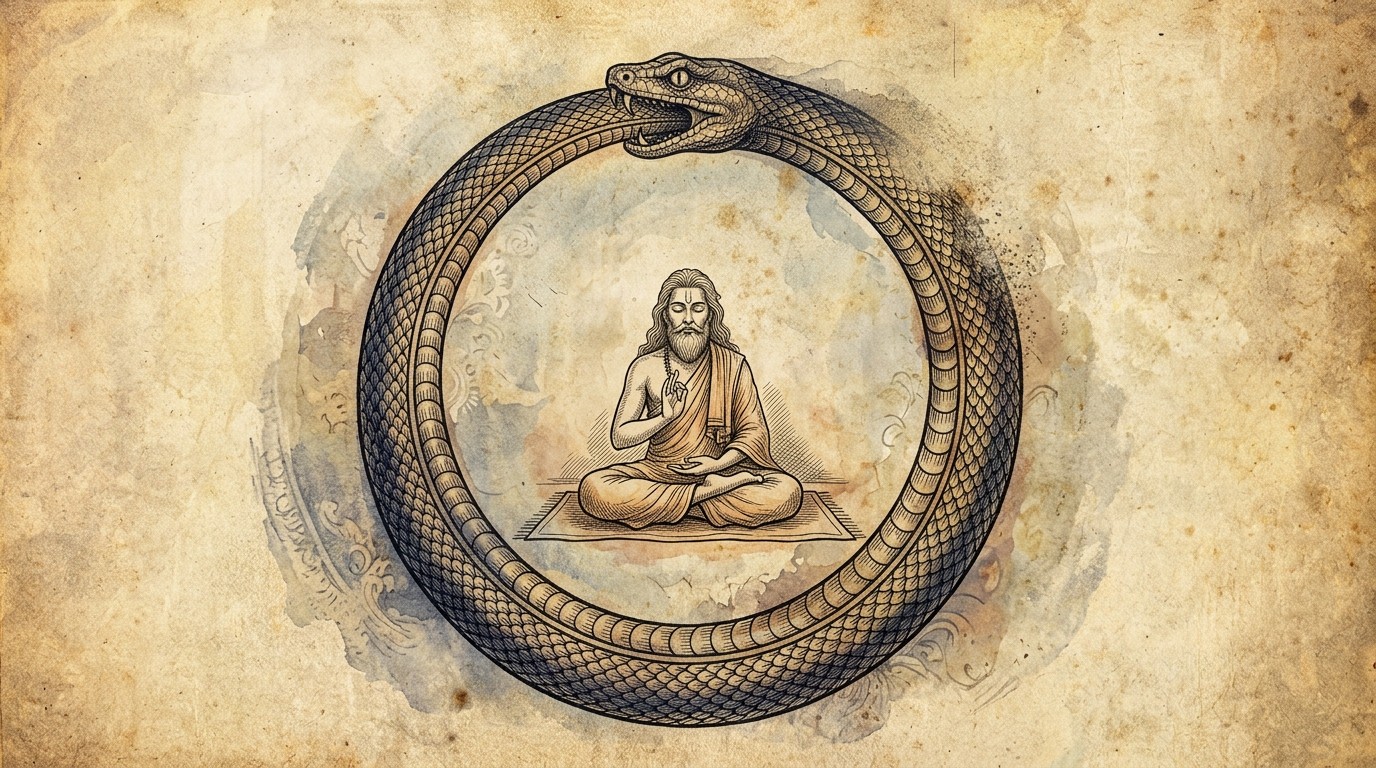
Overthinking feels like problem-solving, which is exactly why it is so hard to stop. You tell yourself you are being careful, thorough, responsible — and yet hours later you are more drained, no clearer than before, and the same thought is still circling. The truth almost no one says out loud is that overthinking is not thinking at all. It is a loop. And you cannot fix a loop with more thinking, because thinking is the very thing feeding it.
Is overthinking the same as thinking?
Real thinking moves toward something — a decision, an insight, a next step — and when it arrives, it stops. Overthinking has no destination. It circles the same point, throwing off endless branches of what if and if only, generating possibilities it can never resolve and quietly draining you the whole time. The two feel similar from the inside, which is why so many capable, intelligent people mistake their overthinking for diligence. The tell is simple: thinking ends in a conclusion; overthinking ends in exhaustion.
Why can't your brain just stop?
Underneath chronic overthinking is a brain that is afraid of uncertainty. The fear is ancient. For our ancestors, not knowing could mean genuine danger, so the mind learned to chew on the unknown as though enough analysis might make it safe. That wiring is still in you. But the future cannot be made certain by thought, so the chewing never ends — it only feels as if it is getting somewhere. You are not actually solving anything. You are performing a ritual of safety, over and over, and paying for it with your energy.
The three shapes overthinking takes
The replay (the past). You relive old conversations, mistakes and embarrassments, editing them, rehearsing what you should have said. The event is long over, but your nervous system keeps treating it as if it is still happening.
The dread (the future). You run worst-case scenarios on a loop — what if I fail, what if they are angry, what if it all falls apart. You are not preparing for the future; you are living the anxiety of it in advance, sometimes dozens of times over.
The freeze (the present). You convince yourself you need just a little more information before you can decide, so you plan and research endlessly and never actually begin. Certainty becomes the price of action, and certainty never arrives.
Different shapes, one engine.
Why telling yourself to stop never works
Here is the part that changes everything. The thought itself is usually harmless. What makes it loop is the emotion glued to it — most often a low, background anxiety that was already present and simply looking for something to attach to. A friend does not reply; the unease latches on, and within seconds you have built an entire story. You are convinced you are anxious because of the unanswered message. In reality the message is only the hook — the anxiety was already there, waiting.
This is why willpower fails here. Ordering yourself to stop thinking attacks the thought while leaving the feeling underneath it untouched, and that feeling simply finds the next thought to grip. Remove the emotional charge, and the thought stops looping on its own. That is the whole game: you do not argue a loop into silence, you settle whatever is powering it.
How do you actually break the loop?
You break it by changing levels — moving from the content of the thoughts to the state underneath them. A few moves that reliably help:
Run the present-action filter. Ask one question: is there a physical action I can take about this, right now? If yes, take it. If no, that is your signal that more thinking is wasted — there is nothing here to solve in this moment, only a loop to release.
Shift from why to what-next. Asking why is this happening to me keeps you circling in the emotional brain. Asking what is one small step I can take moves you into the part of the brain that actually solves things. The question you ask decides which mind answers.
Go to the body, not the thought. When the loop spins up, find where the anxiety physically lives — the tightness in the chest, the shallow breath, the knot in the stomach. Rest your attention there and simply watch the sensation, without trying to fix or judge it. As the sensation eases, the grip of the thoughts loosens with it, because you have gone beneath the words to the thing actually driving them. If it feels intense, ground yourself first: name a few things you can see, a couple you can hear, one you can feel. It pulls you out of the loop and back into the room you are actually in.
Get it out of your head. Unexpressed thoughts loop the hardest. Write them down — keywords are enough — or say them to someone who can listen without rushing to fix you. Turning fluid, swirling worry into solid words drains a surprising amount of its power.
What the older traditions understood
None of this is new. Long before there was any language for the nervous system, the yogic traditions had already named the problem with unsettling precision. They called the mind's restless churn chitta-vritti — the ceaseless fluctuations of consciousness — and treated the stilling of it as the very purpose of practice. They also named the way out: sakshi bhaav, the witnessing attitude. Instead of being swept along by each thought, you learn to observe it as a passing event rather than as you. The moment you stop being the thought and become the one who notices it, a gap opens — and in that gap, the loop loses its hold.
That witnessing is a skill, and like any skill it has a method: a body-first, step-by-step practice that settles the nervous system so the gap appears on its own, even on a hard day. That is the part that takes real guidance, and it is exactly what most advice on overthinking quietly leaves out.
The shift
Stop trying to win the argument in your head — there is no winning a loop. Overthinking is not resolved at the level of thought; it is resolved by settling the body and the anxiety beneath it. Once the system feels safe, the thought has nothing left to grip, and the quiet you have been chasing arrives on its own.
Frequently asked questions
What is the difference between overthinking and thinking something through properly?
Thinking something through moves toward a decision and then stops. Overthinking circles without resolving and leaves you more drained than when you started. If you are generating worry rather than options, you have crossed into the loop.
Why does my overthinking get worse at night?
At night there is no action you can take and few distractions to occupy the mind, so it has open space to loop — and a tired nervous system is less able to regulate the anxiety underneath. Bringing your attention to the body, or writing the thoughts down before bed, tends to help far more than trying to reason them away.
Can you actually stop overthinking, or only manage it?
You can reduce it substantially. Because the loop is driven by anxiety attached to thoughts, learning to settle that underlying state — and to observe thoughts instead of merging with them — makes the loops shorter, quieter and much easier to step out of.
Why doesn't telling myself to think positive work?
Because it stays at the level of thought, which is where the loop lives. Replacing a negative thought with a positive one leaves the underlying anxiety untouched, and that anxiety simply attaches to the next thought. Real relief comes from calming the state beneath the thinking, not from rewording it.
That ability to settle the loop is trainable. Bhairava Somatics rebuilds the body-first methods behind chitta-vritti and the witnessing attitude into short, guided sessions — in clear Hindi audio and in the right sequence — so calm becomes something you can reach on purpose, rather than something you wait and hope for. Explore the methods →